
23/08/ · Applying this logic, if the trader had opened trade with 1, and made a profit of , they will have an account balance of 1,, but the equity will be 1, If the trade results in a loss, the account balance will remain 1,, but the equity will go downwards to 03/11/ · Effective Leverage Ratio = Total trading position size/ Total Equity. Let us assume that a trader has $10, in his trading account. He has already opened two positions with two different asset pairs. $50, long on EUR/USD; $10, short on USD/CAD; As the trader has opened two positions, so Estimated Reading Time: 7 mins 25/07/ · Equity is also known as the crucial leverage factor. Mostly, equity on a Forex account should be higher than the margin utilised for trades. The leverage factor, or the equity applied for the trade, can go a long way in terms of defining the profits made, or the losses sustained on the account. This pushes us to the point of understanding why it is important for traders to understand how to use equity to generate a balance Estimated Reading Time: 8 mins
How Leverage Works in the Forex Market
Although most trading platforms calculate profits and losses, used margin and useable margin, and account totals, it helps to understand these calculations so that you can plan transactions and determine potential profits or losses.
Important note! The exchange rates used in this article are for illustrative purposes, so the exchange rates themselves are not updated, since it serves no pedagogical purpose.
Foreign exchange rates vary continuously, so current exchange rates may deviate largely from what is presented here. Nonetheless, the exchange rates were accurate when the article was written, and regardless of the current rates, the exchange rates used here still illustrate the principles presented in this article, which do not change. Most forex brokers allow a very high leverage ratio, or, to put it differently, have very low margin requirements.
This is why profits and losses vary greatly in forex trading even though currency prices do not change all that much — certainly not like stocks. Stocks can double or triple in price, or fall to zero; currency never does. Because currency prices do not vary substantially, much lower margin requirements are less risky than it would be for stocks.
Note, however, that there is considerable risk in forex trading, so you may be subject to margin calls when currency exchange rates change rapidly. Such leverage ratios are still sometimes advertised by offshore brokers. However, inUS regulations limited the ratio to The purpose of restricting the leverage ratio is to limit the risk. The margin in a forex account is often called a performance bondbecause it is not borrowed money but only the equity needed to ensure that you can cover your losses.
In most forex transactions, nothing is bought or sold, only the agreements to buy or sell are exchanged, so borrowing is unnecessary. Thus, no interest is charged for using leverage. Thus, buying or selling currency is like buying or selling futures rather than stocks.
The margin requirement can be met not only with money, but also with profitable open positions. How to compute equity in leverage forex equity in your account is the total amount of cash and the amount of unrealized profits in your open positions minus the losses in your open positions. Your total equity determines how much margin you have left, and if you have open positions, total equity will vary continuously as market prices change.
Instead of a margin call, the broker may simply close out your largest money-losing positions until the required margin has been restored. The leverage ratio is based on the notional value of the contract, how to compute equity in leverage forex the value of the base currency, which is usually the domestic currency, how to compute equity in leverage forex. For US traders, the base currency is USD. Often, only the leverage is quoted, since the denominator of the leverage ratio is always 1.
The amount of leverage the broker allows determines the amount of margin that you must maintain. Leverage is inversely proportional to margin, summarized by the following 2 formulas:. To calculate the amount of margin used, multiply the size of the trade by the margin percentage.
Subtracting the margin used how to compute equity in leverage forex all trades from the remaining equity in your account yields the amount of margin that you have left.
You want to buyEuros EUR with a current price of 1. How many more Euros could you buy? Because the quote currency of a currency pair is the quoted price hence, the namethe value of the pip is in the quote currency.
If the conversion rate for Euros to dollars is 1. To calculate your profits and losses in pips to your native currency, you must convert the pip value to your native currency.
When you close a trade, the profit or loss is initially expressed in the pip value of the quote currency. To determine the total profit or loss, how to compute equity in leverage forex, multiply the pip difference between the open price and closing price by the number of units of currency traded. This yields the total pip difference between the opening and closing transaction. If the pip value is in your native currency, then no further calculations are needed to find your profit or loss, but if the pip value is not in your native currency, then it must be converted.
There are several ways to convert your profit or loss from the quote currency to your native currency. If you have a currency quote where your native currency is the base currency, then you divide the pip value by the exchange rate; if the other currency is the base currency, then you multiply the pip value by the exchange rate. Subsequently, how to compute equity in leverage forex, you sell your Canadian dollars when the conversion rate reaches 1.
Because USD is the base currency, you can get your profit in USD by dividing the Canadian value by the exit price of 1. For a cross currency pair not involving USD, the pip value must be converted by the rate that was applicable at the time of the closing transaction.
The Pauper's Money Book shows how you can manage your money to greatly increase your standard of living. Example: If the margin is 0. Example: Calculating Margin Requirements for a Trade and the Remaining Account Equity You want to buyEuros EUR with a current price of 1. Personal Finance Bankruptcy Chapter 7 Chapter 13 Chapter 11 Credit and Debt Debt Collection Insurance Types of Insurance Auto Homeowner Health Life Real Estate Taxes Income Taxes Personal Deductions and Tax Credits Retirement Plans Gratuitous Transfer Taxes Educational Tax Benefits Taxation of Investments Business Taxes Wills, Estates, how to compute equity in leverage forex, and Trusts Wills and Estates Trusts Investments Investment Fundamentals Investment Funds Mutual Funds Limited Partnerships Banking Bonds Types Of Bonds Government Securities Money Market Instruments Corporate Bonds Asset Backed Securities Forex Futures Options Stocks Stock Indexes Stock Valuation and Financial Ratios Technical Analysis Economics Contact Me!
Save, invest, and earn more money. Get out of debt. Increase your credit score. Learn to negotiate successfully. Manage time effectively. Invest for maximum results with a minimum of risk. Minimize taxes. Earn tax-free income. Earn more from a career or from running a business.
This IS WHY Most BEGINNERS Lose Their ACCOUNTS (What Is Leverage?)
, time: 24:32How to Calculate Leverage, Margin, and Pip Values in Forex, with Examples
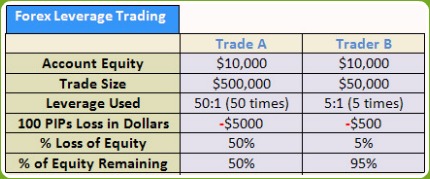
1- How much you are willing to risk losing in your specific forex trade. 2- The distance between your stop loss and entry order. Voila! Then, you can insert your trade size in Estimated Reading Time: 5 mins 25/07/ · Equity is also known as the crucial leverage factor. Mostly, equity on a Forex account should be higher than the margin utilised for trades. The leverage factor, or the equity applied for the trade, can go a long way in terms of defining the profits made, or the losses sustained on the account. This pushes us to the point of understanding why it is important for traders to understand how to use equity to generate a balance Estimated Reading Time: 8 mins 23/08/ · Applying this logic, if the trader had opened trade with 1, and made a profit of , they will have an account balance of 1,, but the equity will be 1, If the trade results in a loss, the account balance will remain 1,, but the equity will go downwards to


No hay comentarios.:
Publicar un comentario